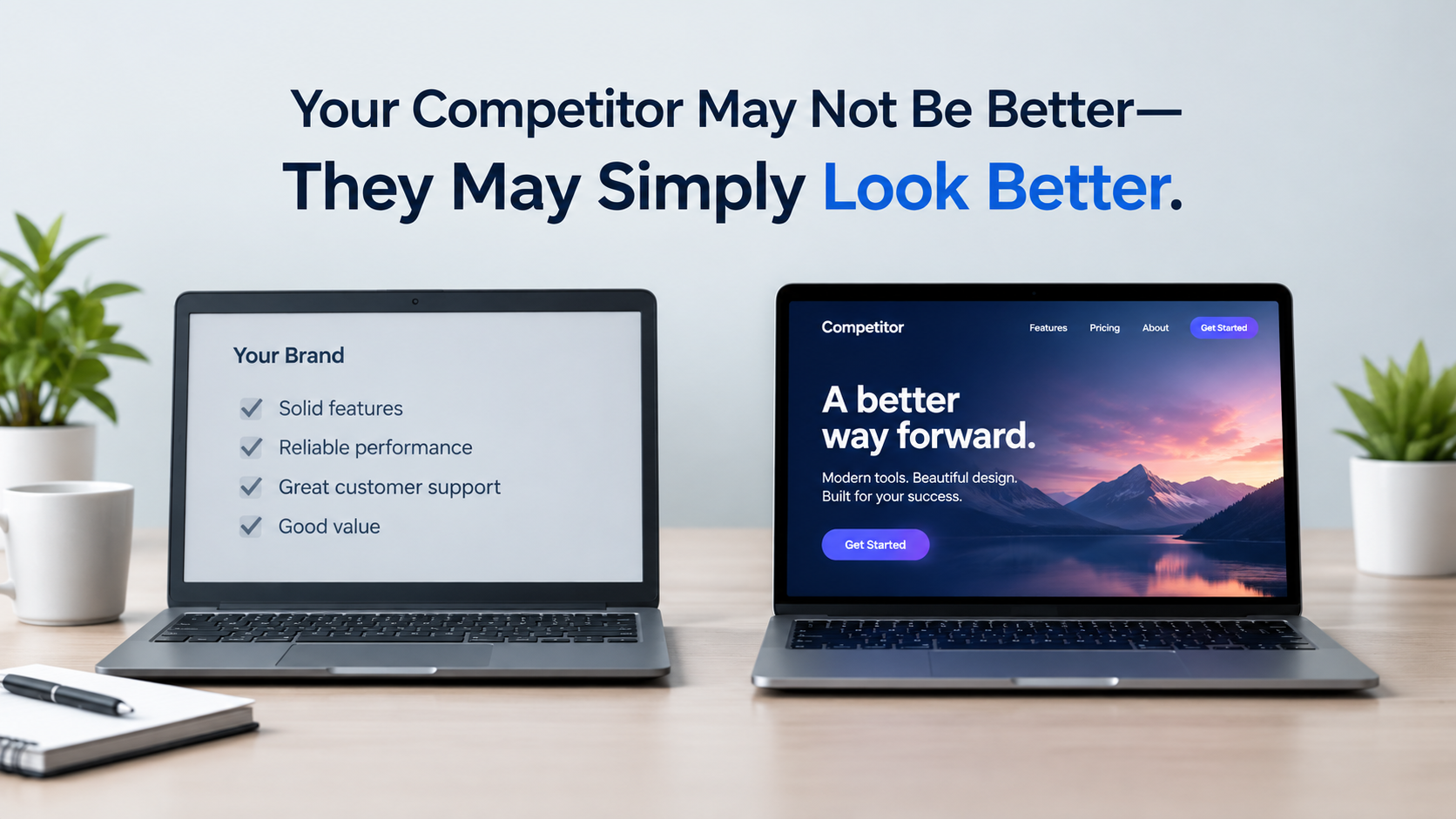
When businesses think about updating their brand, they often focus on the obvious elements: the logo, website, color palette, or social media presence.
Company photography is often overlooked.
But outdated team photos, generic headshots, old office images, and visuals that no longer reflect your business can quietly affect how people perceive your brand. Even if your products or services have evolved, old photography can make your entire business feel stuck in the past.
The cost isn’t always obvious—but it can show up in your credibility, consistency, marketing effectiveness, and customer trust.
Here’s why outdated company photography may be costing your business more than you realize.

1. It Can Make Your Brand Feel Outdated
Visuals create an immediate impression.
Before someone reads your website copy or learns about your services, they are already forming an opinion based on what they see. If your photography looks old, poorly lit, inconsistent, or disconnected from your current brand, visitors may assume the rest of your business is equally behind the times.
This is especially important in competitive industries where customers are comparing multiple businesses before making a decision.
You may offer exceptional service, innovative solutions, and years of expertise—but outdated imagery can communicate the opposite.
Your photography should reflect the business you are today, not the business you were five or ten years ago.
2. It Creates a Disconnect Between Your Brand and Reality
Businesses change.
Teams grow. Leadership changes. Services evolve. Offices are redesigned. Your audience may shift, and your positioning may become more refined.
When your photography doesn’t keep up, it can create a noticeable disconnect.
Imagine visiting a company’s website and seeing team members who no longer work there, an office the business moved out of years ago, or imagery that no longer represents the company’s culture.
Even small inconsistencies can affect trust. Customers want to feel confident that what they see accurately represents the business they are considering.
Current photography helps close the gap between your brand promise and the real-world experience of your company.

3. It Can Undermine Trust and Credibility
People want to know who they are doing business with.
Authentic, professional photography can make a company feel more approachable, established, and credible. Outdated photography, on the other hand, can unintentionally raise questions.
Is the website actively maintained? Is the business still growing? Are the people shown still part of the company?
Your audience may never consciously ask these questions, but visual cues influence perception quickly.
When every part of your brand looks current and intentional, it reinforces the idea that your business is professional and paying attention to the details.
4. It Makes Marketing Harder
Outdated photography can create practical problems for your marketing team.
You may find yourself reusing the same handful of images repeatedly because you don’t have enough current visual assets. Or perhaps your team relies heavily on stock photography because there are no recent photos available.
This can make creating consistent marketing materials more difficult and time-consuming.
Fresh company photography gives you a library of versatile assets that can be used across:
- Your website
- Social media
- Email marketing
- Sales presentations
- Recruitment materials
- Advertising campaigns
- Press and public relations
Instead of scrambling to find an image every time you create something new, your team has access to visuals that already align with the brand.


5. It Can Make Your Brand Feel Less Human
Customers increasingly want to connect with the people behind a business.
Generic stock images can be useful, but they cannot always replace authentic visuals of your team, workplace, products, or process.
Real photography gives your audience a behind-the-scenes look at who you are. It adds personality and helps turn an abstract company into a recognizable brand.
If the only photos representing your business are outdated—or don’t represent your business at all—you may be missing an opportunity to create a stronger human connection.
6. It Can Hurt Brand Consistency
Photography is part of your visual identity.
The style of your images—the lighting, composition, editing, subject matter, and overall mood—should work alongside your colors, typography, and design system.
When your company uses a mix of old headshots, random stock images, smartphone photos, and visuals from different time periods, the result can feel disconnected.
A consistent photography approach helps create a more cohesive brand experience across every platform.
That doesn’t mean every image needs to look identical. It means your audience should be able to recognize a shared level of quality and a visual connection between the different pieces.
7. It May Be Sending the Wrong Message About Your Business
Photography communicates more than appearance.
The people you feature, the environments you show, and the moments you capture all contribute to your brand story.
If your company has become more innovative, more diverse, more customer-focused, or more premium, your photography should help communicate that evolution.
Old visuals may continue telling a story that no longer fits.
A photography refresh gives you the opportunity to be intentional about what your images say about your company—and whether that message supports where you want your brand to go next.
The Cost Is More Than a Bad Photo
Outdated company photography may not seem like an urgent problem. After all, the photos still technically work.
But branding is about more than whether something works. It’s about whether it accurately represents your business and helps you make the right impression.
The hidden cost can include:
- Lost credibility
- A weaker first impression
- Inconsistent marketing
- More time spent searching for usable visuals
- Overreliance on generic stock imagery
- A disconnect between your brand and your current business
- Missed opportunities to build trust and connection
Individually, these issues may seem small. Together, they can weaken the overall impact of your brand.

When Is It Time for a Photography Refresh?
If your company photography no longer reflects your current team, culture, services, workspace, or brand direction, it may be time to update your visual library.
A photography refresh doesn’t have to mean replacing every image you own. Start by identifying the visuals that appear most often and have the greatest impact on your audience.
Consider updating:
- Leadership and team headshots
- Website hero images
- Workplace and office photography
- Product or service imagery
- Customer interaction photos
- Behind-the-scenes content
- Brand and lifestyle imagery
The Bottom Line
Your company photography is not just decoration. It is part of how customers evaluate, understand, and remember your business.
If your visuals no longer reflect who you are today, they may be quietly working against the brand you have worked hard to build.
Investing in current, intentional photography can strengthen credibility, improve brand consistency, make marketing easier, and create a more authentic connection with your audience.
Because sometimes, the biggest difference between a brand that feels current and one that feels outdated is simply showing people what the business looks like today.